- United Kingdom
- expand_more

-
Products
View our products
-
Retail

Fresh In-Store Vision
Learn how deep consumer and shopper insights reveal opportunities to unlock growth in the fresh fruits and vegetables category. Could a partnership drive meaningful growth for your retail operation?
-
Knowledge centre

Taking action against ToBRFV
Learn more and get the latest news and information on ToBRFV from Vegetables by Bayer. -
About

At De Ruiter, we believe that by combining our customers passion with our expertise and unique technology we can grow a true piece of art together... Discover the beauty of De Ruiter tomatoes with us!
-
Innovation

Seed Quality Knowledge Center
High-quality seeds mean high performance for youStriving for excellence and high quality is central to our people and processes. Quality is in our DNA. It’s in our core. This means when you plant our seeds, you can start the season with the confidence of high quality and high performance.

What really protects your tomato crop against ToBRFV? A grower-focused conversation with Jan Barten, R&D Strategic Project Lead Bayer.
Tomato growers are hearing strong claims about ToBRFV-resistant rootstocks. But what does the evidence tell us, and where should growers focus on? Jan Barten helps separate market noise from practical crop strategy.
Why has rootstock become such a big topic in the ToBRFV discussion?
"Growers want to reduce risk, and the idea of resistance in both parts of a grafted plant can sound reassuring. But we need to distinguish perceived protection from proven agronomic value. The key question is not simply whether a rootstock carries ToBRFV resistance. It is more important to realize which rootstock traits will help the crop perform throughout the season."
What is the role of scion and rootstock in protection against ToBRFV?
"The scion forms the stems, leaves and fruits. It is also the part where ToBRFV symptoms and their commercial impact matter most. The rootstock provides the root system and supports vigor, balance, water and nutrient uptake, resilience and endurance. Both parts matter, but they have different roles."
“Based on current evidence, rootstocks support crop strength while the resistant scion provides the primary protection against ToBRFV.”
Can ToBRFV infect plants from the roots?
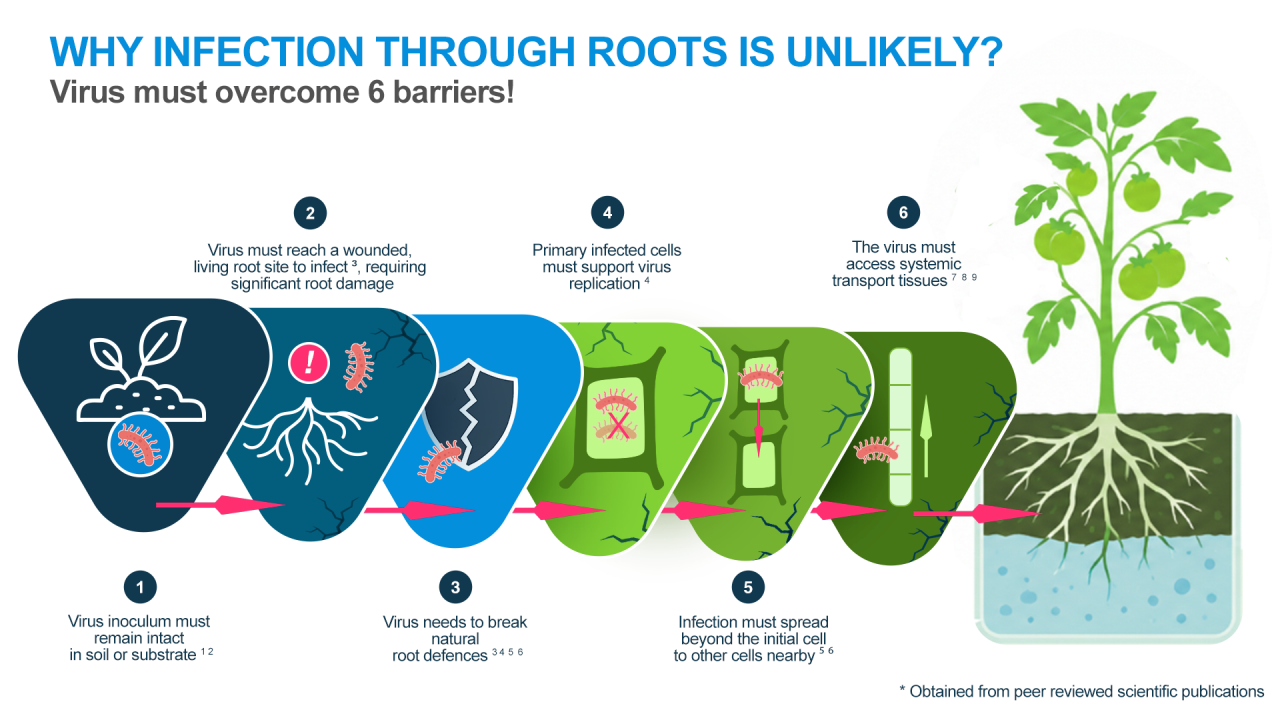
"Several research papers on this topic show inefficient Tobamo infection through the roots under normal crop conditions. The tomato root system has several specific barriers that make infection of Tobamoviruses through the roots very unlikely. For ToBRFV to infect the roots, it must: 1. Remain infectious in the soil or substrate, 2. Reach an open wound in the roots, 3. Overcome specific root defenses at the location of the wound, 4. Replicate, 5. Move to other cells 6. Gain access to the plant’s Xylem transport tissues. Based on current scientific evidence, root-to-shoot infection does not appear to be a primary pathway in commercial protected settings (Literature references at the end**)."
What did Bayer’s research show? *
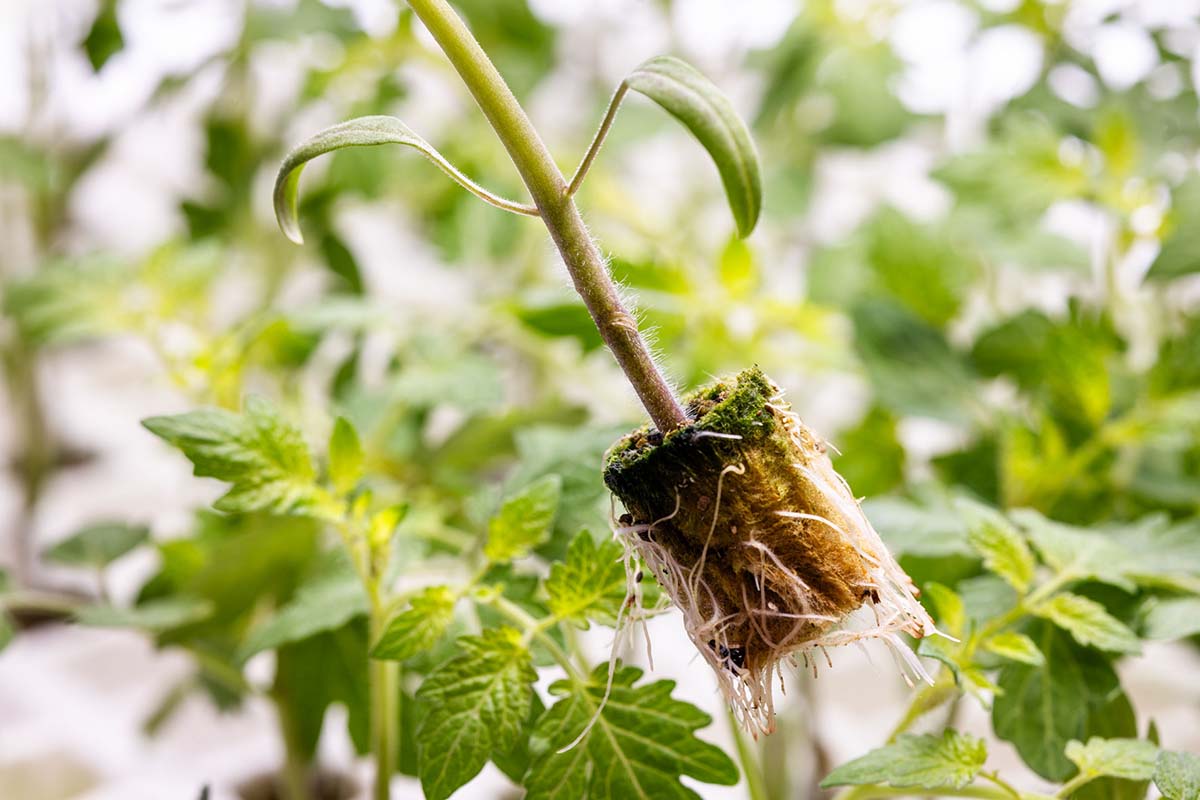
"In a study conducted at an independent institute under controlled conditions, exposed roots in rockwool blocks were damaged and infected with ToBRFV. After six weeks, no virus was detected inside the blocks, nor in the upper parts of the plant. These results suggest very limited uptake and no movement from the roots to the shoot under the trial conditions tested. Additional studies combined various resistance levels in scions and rootstocks in a grafted crop. Symptom observations after controlled leaf infection with ToBRFV indicate that resistant scions showed significantly reduced leaf and fruit symptoms whether grafted onto a susceptible or resistant rootstock. The same study indicated that ToBRFV does not build up in a susceptible rootstock if the scion is resistant."
For further details on this research, see our dedicated page
If roots are not the main route, how does ToBRFV usually spread?
"Under commercial crop conditions, the dominant pathway is mechanical transmission through above-ground tissues, for example during crop handling. In soil crops, infection may occur through water splashing on the leaves or when above ground plant parts touch the soil. This is why hygiene and sanitation remain essential. Resistance is an important tool, but it does not replace disciplined greenhouse hygiene."
Does a grower therefore need a ToBRFV-resistant rootstock?
"Based on the evidence available today**, resistance in the scion appears to be the primary determinant of ToBRFV performance in a grafted plant. Current research suggests that rootstock resistance alone may offer limited added protection. Growers should evaluate rootstock choices based on all relevant agronomic factors, not solely on a single resistance trait."
So, what should growers look for in a rootstock?
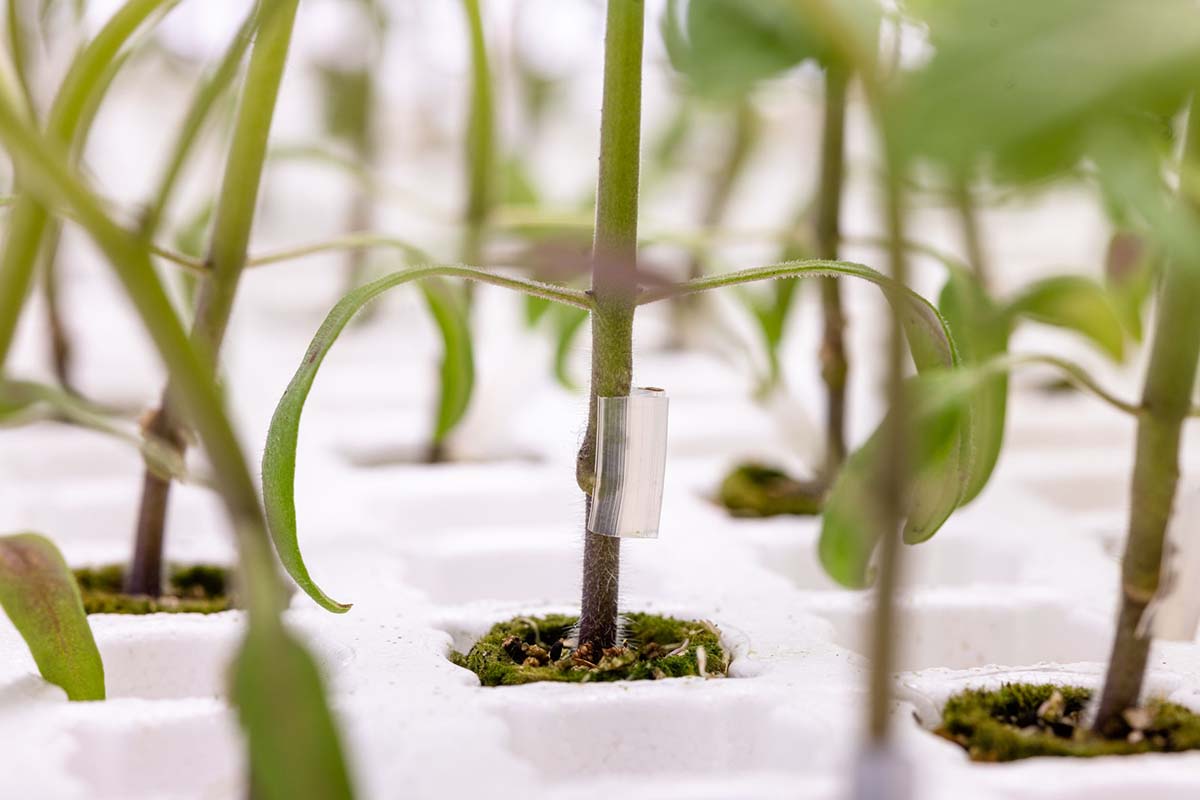
"Choose the rootstock for the agronomic role it has. Look for a proven combination of vigor, endurance, balance, root strength, stress support, and relevant soil-borne disease resistances. The right rootstock choice depends on the scion, production system, crop length, climate and local growing conditions."
What is the practical ToBRFV strategy for a glasshouse grower?
1. Start with a resistant scion
The scion is the primary driver of resistance and symptom expression in the grafted crop.
2. Keep hygiene rigorous
Reduce the risk of entrance and mechanical spread through disciplined sanitation and crop-handling practices.
3. Select a vigorous, enduring rootstock
Build a strong foundation that supports crop balance, resilience, and performance throughout the season.
What is your final message for growers?
"Do not let one claim choose your rootstock. Focus on the complete crop strategy. Put ToBRFV resistance where it matters most, in the scion. Protect the glasshouse with strong hygiene. Then select a rootstock for the strength, balance, and endurance that your crop needs."
Note: ToBRFV research is an evolving field. The recommendations above reflect Bayer’s current understanding based on available evidence. Growers should stay informed of new developments and adapt their strategies accordingly. Local growing conditions, pathogen pressure, and regulatory requirements vary by region.
* Research results reported were obtained under specific experimental conditions, for details see: https://www.vegetables.bayer.com/gb/en-uk/knowledge-centre/vegetables-by-bayer-tobrfv-knowledge-centre/tobrfv-and-the-role-of-rootstock.html
RESISTANT SCION. RIGOROUS HYGIENE. STRONG ROOTSTOCK.
Plan smart. Plant strong. Success starts with the roots.
**LITERATURE
- Park W.M., Lee G.P., Ryu K.H., Park K.W. (1999). Transmission of Tobacco mosaic virus in recirculating hydroponic system. Scientia Horticulturae 79, 217-226.
- Koh S.H., Li H., Sivasithamparam K., Admiraal R., Jones M.G.K., Wylie S.J. (2018). Low root to root transmission of a tobamovirus, yellow tailflower mild mottle virus, and resilience of its virions. Plant Pathology 67, 651-659.
- Chuberre C., Plancot B., Driouich A., Moore, J.P., Bandor M., Gügi B., Vicré M. (2018). Plant immunity is compartmentalized and specialized in roots. Frontiers in Plant Science 9, 1692.
- Valentine T.A., Roberts I.M., Oparka K.J. (2002). Inhibition of tobacco mosaic virus replication in lateral roots is dependent on an activated meristem-derived signal. Protoplasma 219, 184-196.
- Munzert K., Engelsdorf T. (2025). Plant cell wall structure and dynamics in plant-pathogen interactions and pathogen defence. Journal of Experimental Botany, vol 76, No 2 pp228-242.
- German L., Yeshvekar R., Benitez-Alfonso Y. (2023). Callose metabolism and the regulation of cell walls and plasmodesmata during plant mutualistic and pathogenic interactions. Plant, Cell & Environment 46, 391-404.
- Caldwell J., (1931). The physiology of virus diseases in plants: II Further studies on the movement of mosaic in the tomato plant. Annals of Applied Biology 18, 279-298.
- Caldwell J., (1934). The physiology of virus diseases in plants: V. The movement of the virus agent in tobacco and tomato. Annals of Applied Biology 21, 191-205.
- Kan J. and Citovsky V. (2025). The roles of movement and coat proteins in the transport of tobamoviruses between plant cells. Frontiers in Plant Science 16:1580554.
News for you
Stay up to date about ToBRFV
Need more information?
Disclaimer: The information in this article is for general educational purposes only and does not constitute agronomic advice for specific growing conditions. Results may vary depending on local conditions, crop systems, and pathogen pressure. Growers should consult local experts and conduct their own assessments before making production decisions. Bayer makes no warranty, express or implied, regarding the application of this information.
All information on Bayer IR-ToBRFV tomato varieties reflects tests and knowledge at product launch. On request, Bayer will share available data on performance, seed treatment, and detection, as permitted by law and Grower shall maintain confidentiality with respect thereto. Resistance is defined by the virus state at launch and may be updated as knowledge evolves; this disclaimer shall be deemed modified by such update upon communication thereof. The Grower is responsible for assessing local suitability and acknowledges that crop management practices may affect resistance, for which Bayer is not liable. Bayer’s only warranty is label conformity at dispatch; all other warranties are disclaimed and liability is limited to a refund up to the seed price. Grower shall not transfer any data provided hereunder without Bayer’s prior written consent and shall indemnify and hold harmless Bayer for all losses arising from any unauthorised transfer, including by third parties.
All information concerning the products given orally or in writing by any entity of Bayer Group or its employees or agents, including the information in this website, is given in good faith, but is not to be taken as a representation or warranty by this entity as to the performance or suitability of those products, which may depend on local climatic conditions and other factors. Bayer Group and all its entities assume no liability for any such information. This information shall not form part of any contract with any entity of Bayer Group unless otherwise specified in writing.