
A biological seed treatment with fungicidal and crop-enhancing properties.
Skip to Main Content

- United Kingdom
- expand_more
Vegetables United Kingdom & Ireland
-
Products
View our products
-
Retail

Fresh In-Store Vision
Learn how deep consumer and shopper insights reveal opportunities to unlock growth in the fresh fruits and vegetables category. Could a partnership drive meaningful growth for your retail operation?
-
Knowledge centre

Taking action against ToBRFV
Learn more and get the latest news and information on ToBRFV from Vegetables by Bayer. -
About

At De Ruiter, we believe that by combining our customers passion with our expertise and unique technology we can grow a true piece of art together... Discover the beauty of De Ruiter tomatoes with us!
-
Innovation

Seed Quality Knowledge Center
High-quality seeds mean high performance for youStriving for excellence and high quality is central to our people and processes. Quality is in our DNA. It’s in our core. This means when you plant our seeds, you can start the season with the confidence of high quality and high performance.
Susteed
Stronger seed.
Smarter Start.
Unlock vegetable seeds’ potential, right from the start

Susteed is a biological seed treatment that acts in multiple ways to help vegetable seeds become strong, healthy plants.
Seeds treated with Susteed get an early boost to disease management, plant defense stimulation and root development. All delivered through a single microbial ally – and all supporting a strong start, quick establishment and vigorous growth.
Proven performance.
Susteed has repeatedly demonstrated its benefits in lab and transplant trials.

The benefit in numbers.
Transplant trials on Brassica have indicated that Susteed can provide:
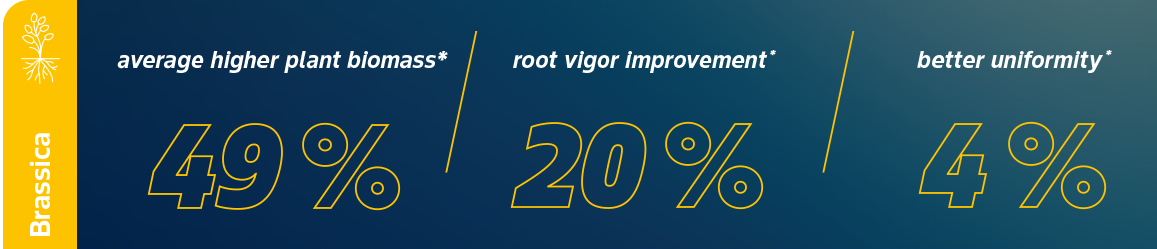
* Transplant trials with Brassica vegetable crops (broccoli, cauliflower, cabbages). Average difference at the end of transplant production phase compared to non-treated seeds, across multiple locations, representative conditions, with no inoculation.
What can Susteed do for you?
Vegetable growers today must handle increasing disease pressure, changing growing conditions, and stricter expectations for sustainable production. They need new solutions to help them get more from every seed and plant, giving them the best chance of growing strongly and producing yields reliably.
That is what Susteed is designed to deliver. As a seed treatment, it is active right from the start after planting, protecting young plants and supporting root growth – so they can get established strongly and stay resilient throughout the growing cycle.
Three key ways seeds can benefit from Susteed:

Quick establishment
Plants have a strong start with early Fusarium and Rhizoctonia management.

Healthy roots
Roots get a boost, helping the plant access nutrients and grow strongly.

Biological disease-management support
Biological mode of action supporting integrated disease management during early establishment.
New solution, proven technology
Susteed brings a proven and long-standing biological active ingredient into a new seed treatment format.
Its active ingredient, Bacillus amyloliquefaciens strain QST713, has a long track record of successful use as part of the Serenade family of foliar-applied biologicals.
With Susteed, this proven technology is applied directly to the seed, enabling it to become active from the earliest stages of plant development. The active ingredient is delivered in a new formulation with higher concentration and spore count – optimized for seed-treatment use.
How does Susteed work?
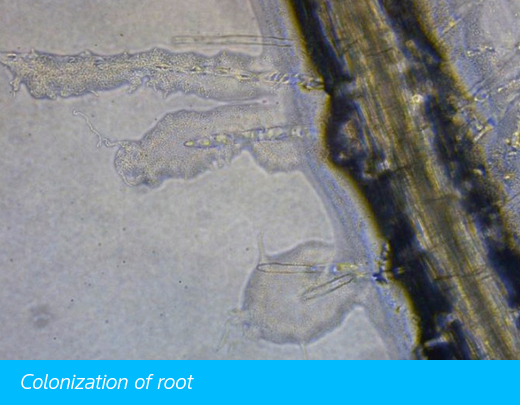
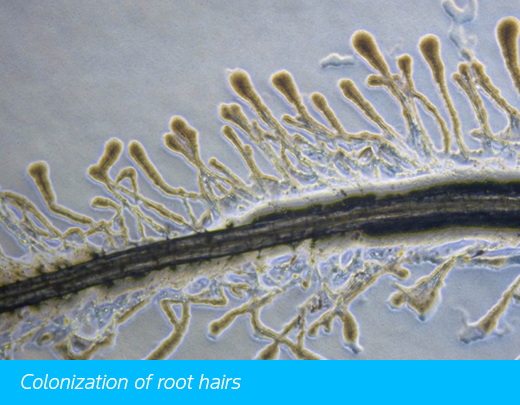
Susteed works through root colonization. After a seed treated with Susteed is planted, Bacillus amyloliquefaciens quickly becomes active in the soil¸ establishing itself on the root and forming a ‘microbial zone’ around it.
As plant roots grow, so does the microbial zone, eventually forming a dense biofilm around the full root.
The biofilm blocks out below-ground diseases while promoting root biomass and helping the plant absorb more nutrients. At the same time, the active ingredient is systemic: it is taken up into the plant and helps induce plant response to diseases above ground.
All-round performance: Susteed’s 3 effects in a nutshell:
1. Fungicidal action: Early action against soil-borne diseases such as Fusarium and Rhizoctonia
2. Induced systemic resistance: Stimulates natural responses, priming the plant to defend itself below and above ground
3. Root development: Plant roots that come into contact with Susteed exhibit higher root mass and density, helping the plant absorb more nutrients and withstand environmental stresses such as drought
Results we can be confident in
Susteed has repeatedly demonstrated its performance in transplant and lab trials. Plant biomass, plant vigor and uniformity have all been shown to benefit when Susteed is applied, compared to market standard or untreated controls.

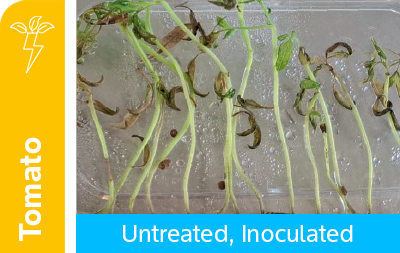
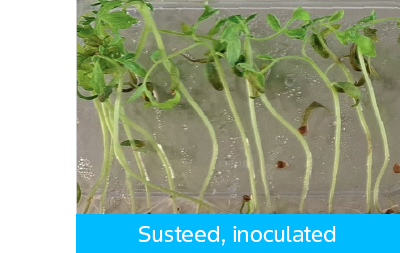
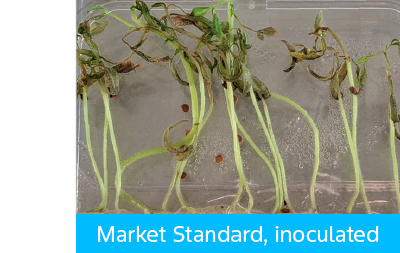
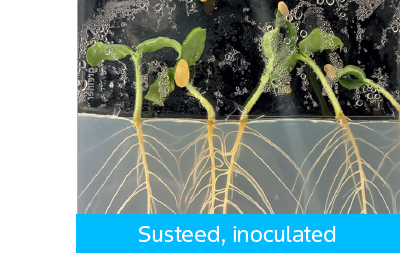
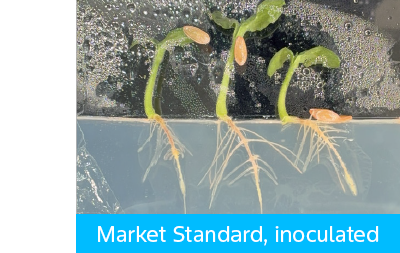
Strengthens establishment: In sterile conditions and under moderate Rhizoctonia pressure, Susteed improves seedling health in tomato (Solanacea family) compared with the untreated control and a reference seed treatment. 28 days after sowing, 21 days after inoculation
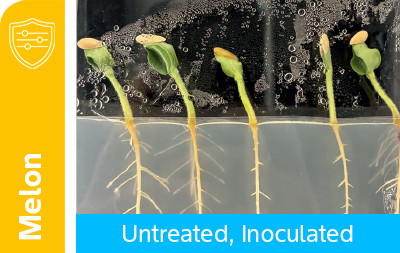
Helps withstand early disease pressure: : In melon trials under Fusarium disease melon with root rot symptoms occurring, Susteed delivered superior root vigor compared with competitor-treated and control seeds. 14 days after sowing, 4 days after inoculation.
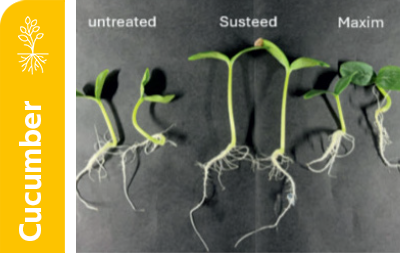
10 days after sowing
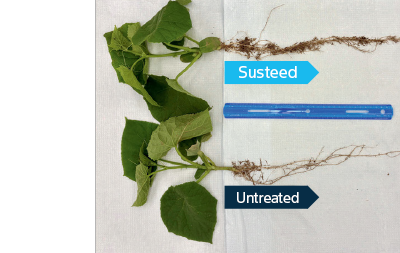
25 days after sowing
Visibly improves roots: Under no disease pressure, Susteed significantly increases the germination and root vigor.
Biological protection for today and tomorrow
As societal expectations and retailer standards continue to rise, vegetable growers are looking for new ways to protect their investment in premium seeds.
Susteed adds a targeted biological option to their toolbox – combining disease control and plant stimulation while supporting integrated disease management programs and helping limit resistance issues and residues.
It is a powerful tool to help growers succeed, today and tomorrow.
Discover how Susteed can support your crop from seed onward.
Frequently asked questions about Susteed
Susteed’s active ingredient is strain QST713 of Bacillus amyloliquefaciens, delivered in a highly concentrated and stable formulation with enhanced spore content.
Bacillus amyloliquefaciens colonizes the plant root and forms a biofilm around it. This provides multiple benefits: it acts as a fungicide, promotes root growth and increased nutrient uptake, and causes the whole plant to be more resistant from within (Induced Systemic Resistance).
The active ingredient was already part of the Serenade product family, a proven biological foliar treatment with many years of use. For the first time, it is being formulated as a seed treatment.
The availability of seeds treated with Susteed varies by country, crop and approved use. Please consult your local Bayer representative or contact us using the form on this page.
Last edited on: 9th Sept 2026
Would you like to know more about Susteed?
The data and graphics presented reflect findings from tests and observations. They have been compiled to the best of our knowledge. However, the findings and results also depend on factors beyond the control of Bayer, such as local climatic conditions, which may be subject to considerable fluctuations. Bayer can therefore not guarantee the results and the advantages or disadvantages calculated and derived from individual cases. Availability, approved uses and claims may vary by country. Always read and follow the label and product information before use.