January 5, 2026
Skip to Main Content

- United Kingdom
- expand_more
Vegetables United Kingdom & Ireland
-
Products
View our products
-
Retail

Fresh In-Store Vision
Learn how deep consumer and shopper insights reveal opportunities to unlock growth in the fresh fruits and vegetables category. Could a partnership drive meaningful growth for your retail operation?
-
Knowledge centre

Taking action against ToBRFV
Learn more and get the latest news and information on ToBRFV from Vegetables by Bayer. -
About

At De Ruiter, we believe that by combining our customers passion with our expertise and unique technology we can grow a true piece of art together... Discover the beauty of De Ruiter tomatoes with us!
-
Innovation

Seed Quality Knowledge Center
High-quality seeds mean high performance for youStriving for excellence and high quality is central to our people and processes. Quality is in our DNA. It’s in our core. This means when you plant our seeds, you can start the season with the confidence of high quality and high performance.

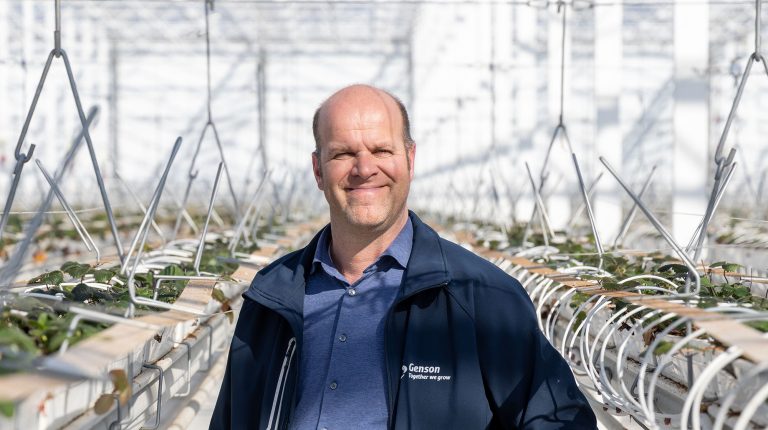
Will Roberts
Business Development Manager Strawberry at Bayer
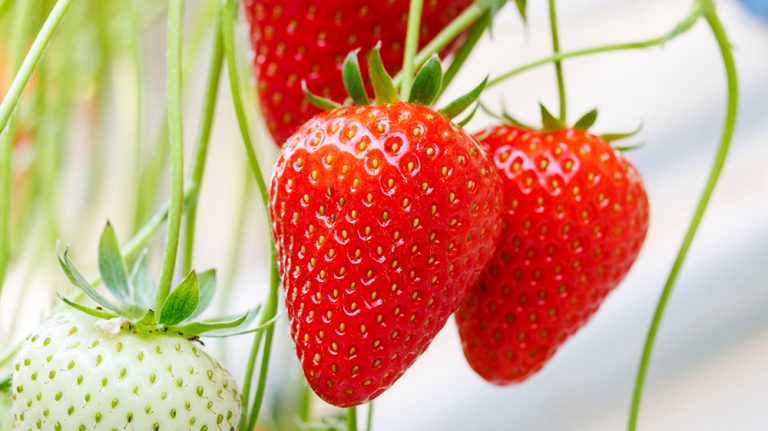
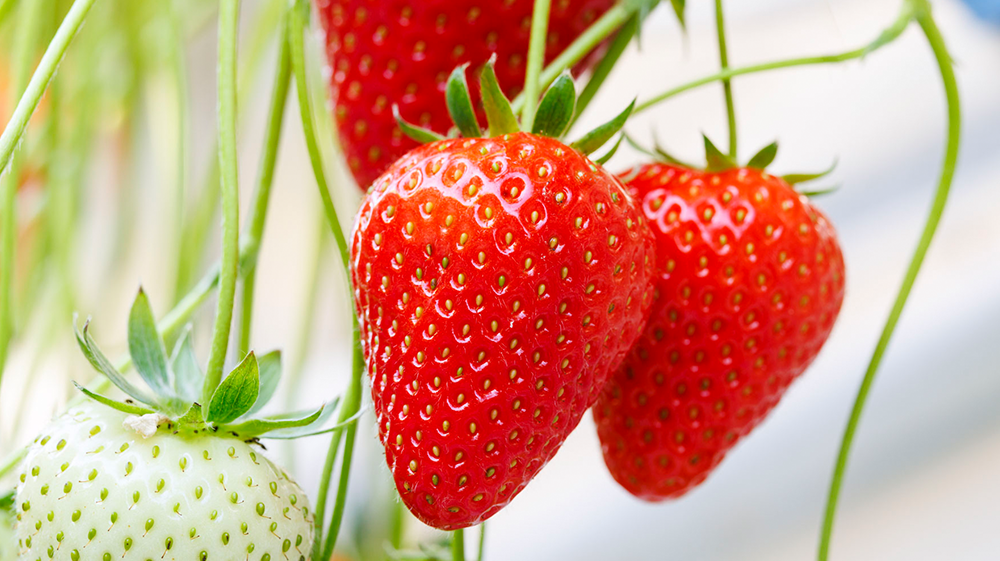
A strategic move into strawberries marks an exciting new chapter for Bayer De Ruiter. With Baya Solara* (EM2836), their first commercial strawberry variety, the company brings decades of vegetable breeding expertise to the berry market. This early-mid season June-bearer combines high yield potential with disease resistance and labor efficiency. Qualities that address today's most pressing production challenges. Set for launch in January 2026, Baya Solara* (EM2836) targets Northern Europe's rapidly growing protected cropping sector.
Strategic portfolio expansion
Bayer's entry into strawberries is far from random. "Strawberry is a fast-growing fruit crop that offers significant global opportunities," explains Will Roberts, Business Development Manager for Strawberry at Bayer. The synergies with the existing portfolio are clear. “Strawberry production in Northern Europe continues to shift into protected cropping. Bayer’s focus on professional protected culture growers under its De Ruiter portfolio allows the growing consumer and retail demand for year-round, high-quality produce to be met.
Beyond production synergies, Bayer brings formidable breeding expertise. "We're a global leader in vegetable breeding, through the development and implementation of advanced breeding technologies, but also our expertise that's been developed over many, many years," Will points out. “By bringing these precision breeding approaches into strawberries not only enables us to accelerate breeding, but also to breed better varieties for our growers and the value chain
Meeting market demands
With the new variety Baya Solara* (EM2836) Bayer meets market demands. “Growers today face mounting pressure. Production costs are rising. Labor is scarce and costly. Disease challenges intensify. Baya Solara* (EM2836) addresses these realities head-on. The variety delivers impressive productivity, not just through yield but through efficiency. The large, uniform and well-presented fruits of Baya Solara* (EM2836) mean harvest efficiency can be maximised. A crucial advantage when labor represents 40-60% of production costs across Northern Europe. Picking speed improvements can contribute significantly to reduced costs of production," Will emphasizes.
Disease resistance has become equally critical. "There's increasing disease pressure," Will states. "New varieties that come to the market need to take a step on and improve on current varieties and historic varieties." Baya Solara* (EM2836) delivers on this front. "The variety shows significant improvement against Phytophthora cactorum, crown rot. With available crop protection declining and sustainability demands increasing, greater genetic resistance becomes increasingly vital.
Distinctive characteristics
Baya Solara* (EM2836) consistently presents uniform fruits of large to very large size. Will: “This consistency gives growers and retailers confidence in reliable performance. The orange-red coloring preserves shelf life by avoiding the darkening that occurs with some varieties post-harvest. Firmness testing, conducted both internally and with research partners, consistently ranks Baya Solara* (EM2836) among leading varieties. The fruit withstands the handling demands of modern retail supply chains, helping to reduce waste. Furthermore, taste delivers pleasant sweetness with balanced sugar-acid ratio.”
Protected cropping focus
With Baya Solara* (EM2836) geography and production systems are carefully targeted. "In terms of regions, we see this as a key variety for territories of Northern Europe, primarily the UK, Benelux and Germany," Will states. “The variety excels in protected systems, such as plastic tunnels and glasshouses, where the market continues to shift away from open field production.”
As a June-bearer, Baya Solara* (EM2836) offers good programmability. “Growers can expect harvest to begin typically 60 days from planting, with 90% of production completed within five weeks. This predictability allows precise planning to meet retail demands and capture optimal supply windows.”
Comprehensive support
Bringing a new variety to market requires patience. From seedling to commercialization typically spans eight years in Bayer's breeding program. “Baya Solara* (EM2836) progressed through multiple trial stages: initial R&D plots, larger on-site trials, then multiple years of off-site grower trials across Europe with research centres and chosen partners. January 2026 marks Baya Solara*'s official launch. After years of development and trialling, the variety becomes openly available," Will announces.
Growers receive detailed recommendations based on years of trial data. Many retailers across Northern Europe have already sampled the fruit, establishing familiarity ahead of commercial production. “This groundwork supports growers in securing their market channels. Also, our learning continues beyond launch as experience accumulates. Critical knowledge that becomes growing recommendations for growers.
A clear ambition
"This introduction means a lot to us as a company," Will emphasizes. "It's the first variety released under Bayer De Ruiter for strawberries. We want to make sure we get it right. For growers, the value chain, and ultimately consumers."
The development program behind Baya Solara has produced top varieties before. Bayer's ambition is clear. Will states: “Baya Solara* (EM2836) should join the ranks of those great varieties, delivering success across the entire value chain.”
*Subject to approval
Grower insights: What makes Baya Solara stand out? Hear it from growers
Baya Solara at De PeelKroon - Planting and a promising step forward in Strawberries
Baya Solara at De PeelKroon - Early spring progress, strong flowers, open crop and a promising start
News for you