- United Kingdom
- expand_more

-
Products
View our products
-
Retail

Fresh In-Store Vision
Learn how deep consumer and shopper insights reveal opportunities to unlock growth in the fresh fruits and vegetables category. Could a partnership drive meaningful growth for your retail operation?
-
Knowledge centre

Taking action against ToBRFV
Learn more and get the latest news and information on ToBRFV from Vegetables by Bayer. -
About

At De Ruiter, we believe that by combining our customers passion with our expertise and unique technology we can grow a true piece of art together... Discover the beauty of De Ruiter tomatoes with us!
-
Innovation

Seed Quality Knowledge Center
High-quality seeds mean high performance for youStriving for excellence and high quality is central to our people and processes. Quality is in our DNA. It’s in our core. This means when you plant our seeds, you can start the season with the confidence of high quality and high performance.

Causal Agent
Tomato yellow leaf curl virus (TYLCV)
Vector
Whitefly (Bemesia tabaci)
Distribution
Worldwide where tomatoes are grown and the vector is present
Symptoms
Plants infected at an early stage can be stunted, develop erect branches and have small chlorotic leaflets that cup and twist upward. Severely affected plants generally do not set fruit. Although less severe, yellowing of leaflets, leaf cupping, failure to set fruit and flower abortion can also be common when infection occurs at a later stage. Fruit that has set before the plants become infected often ripens normally.
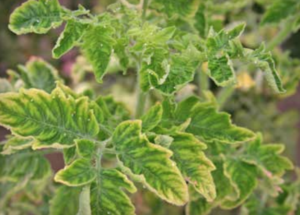 TYLCV: interveinal chlorosis and cupping of leaflets. Note whitefly infestation. (Courtesy of Bill Wintermantel, U.S. Department of Agriculture, Agricultural Research Service)
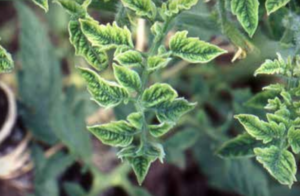 TYLCV: interveinal chlorosis and cupping of leaflets.
Conditions for Development
The virus is acquired from infected tomatoes or several solanaceous weeds by the larvae of the sweet potato whitefly, and is transmitted in a persistent manner by the adult whitefly into a tomato crop. Secondary spread of the virus in a field is common. The virus is not mechanically transmitted, so it is unlikely that it will be spread from infected to healthy plants by workers. Severe outbreaks of the disease are often associated with large populations of the whiteflies.
Control
The use of tolerant varieties greatly reduces losses from this disease, as does the removal of solanaceous weeds that are in the vicinity of the tomato crop. Applying mineral oil on a regular basis may help slow the rate of spread of the disease by reducing the acquisition and transmission of the virus by the whitefly. Covering plant beds with yellow plastic mulch, which attracts the whiteflies, and then spraying on a regular basis with insecticides has proven effective in some areas.