
November 30, 2020
Skip to Main Content

- United States
- expand_more
Vegetables United States
-
Products
Select Your Brand Below to View Full Portfolio of Offerings
-
Resources
Click Below for Specialized Tips for Your Growing Environment
-
About
Discover More About Our Commitment to Advance Health and Nutrition Globally, Together With You.
-
Innovation

Learn about our approach to innovation.

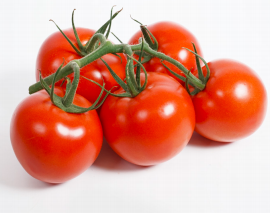
Following the recent launch of Marinice and Bountice in the Large Truss Tomato segment, De Ruiter® proudly presents our new in-development Grandice variety.
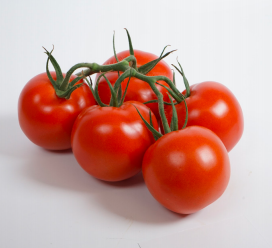
Grandice is a jointless large truss variety with high yield potential, extra-large size and improved truss quality.
Previously trialed under pre-commercial designation DRTH1027. Characteristics are based on a 2-year crop cycle in Canada (2019 and 2020) and trial data from the Netherlands (2020).
Highlights
- Alternate variety to Merlice, Bountice and Marinice
- Developed for glasshouse crops
- Less boats than Marinice
- Large fruit size
- Good shelf life
- Excellent glossy fruits
- Premium plant vigor
- Anticipated Intermediate Resistance to Powdery mildew that’s superior to Merlice
Agronomics
Anticipated Disease Resistance Package
- HR: ToMV:0-2/ToTV/Ff:A-E/Fol:0,1/For/Va:0/Vd:0
- IR: On/Ma/Mi/Mj
- Given its strong vigor and its vegetative start, this variety is suited to long crop cycles. However, though it was developed for longer cycles, it is possible for it to go non-grafted for short cycles due to its resistance to Fusarium crown and root rot and Verticillium wilt.
KEY TO DISEASE RESISTANCE
FF: LEAD MOLD
FOL: FUSARIUM WILT
FOR: FUSARIUM CROWN AND ROOT ROT
MA/MI/MJ: ROOT-KNOT NEMATODE
ON: POWDERY MILDEW
TOMV: TOMATO MOSAIC VIRUS
TOTV: TOMATO TORRADO VIRUS
VA/VD: VERTICILLIUM WILT
HR = HIGH RESISTANCE
IR = INTERMEDIATE RESISTANCE
TO FIND OUT MORE ABOUT DISEASE RESISTANCE AND THE APPLICABLE LEVELS OF DISEASE RESISTANCE, VISIT WWW.WORLDSEED.ORG, AND VIEW THE “DEFINITION OF THE TERMS DESCRIBING THE REACTION OF PLANTS TO PESTS FOR THE VEGETABLE INDUSTRY” PAPER IN THE VEGETABLE RESOURCES SECTION
† Experimental designation. Experimental/precommercial varieties are being shown/described for demonstration purposes only and are not being offered for sale.ffered for sale.
Performance may vary from location to location and from year to year, as local growing, soil and weather conditions may vary. Growers should evaluate data from multiple locations and years whenever possible and should consider the impacts of these conditions on the grower’s fields.
Any recommendations in this article are based upon glasshouse observations and feedback received from a limited number of trials and locations. These recommendations should be considered as one reference point and should not be substituted for the professional opinion of agronomists, entomologists or other relevant experts evaluating specific conditions.
De Ruiter® is a registered trademark of Bayer Group. ©2021 Bayer Group. All rights reserved.
BAYER, BAYER CROSS DESIGN, AND DE RUITER® ARE REGISTERED TRADEMARKS OF BAYER GROUP. ©2020 BAYER GROUP. ALL RIGHTS RESERVED.