Higher Yield
Up to +42% Pepper Yield
The root-knot nematode-resistant pepper hybrids helped to increase pepper yield potential.

Select Your Brand Below to View Full Portfolio of Offerings

Click Below for Specialized Tips for Your Growing Environment

Discover More About Our Commitment to Advance Health and Nutrition Globally, Together With You.

Learn about our approach to innovation.
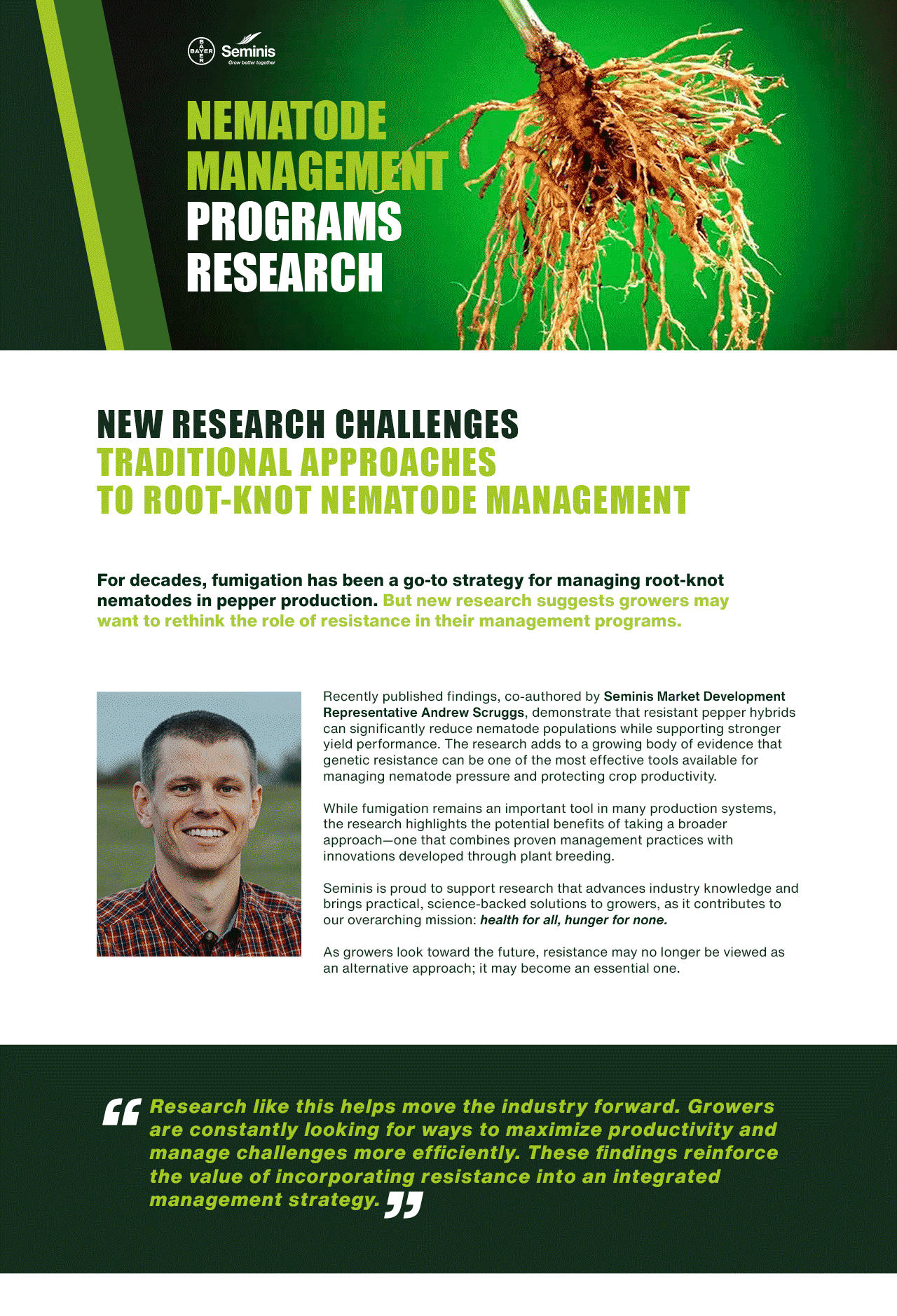
Root-knot nematodes represent one of the most prevalent and damaging taxa affecting solanaceous and cucurbit vegetable crops throughout the southeastern United States. Comprehensive surveys across Georgia, the Carolinas, and Tennessee indicate that up to 67% of vegetable fields are currently infested. With population densities often dramatically surpassing recommended treatment thresholds, these infestations pose a critical, yet frequently overlooked, challenge to long-term crop productivity and sustainability.
Resistant pepper hybrids delivered strong nematode control and improved crop performance, providing results comparable to traditional fumigation-based programs while reducing nematode pressure for the following crop.

Source: Scruggs, C., Gorny, A.M., and Driver, J.G. (2026). Evaluating Management Programs Utilizing Fumigation and Genetic Resistance for Control of Southern Root-Knot Nematode in a Pepper-Cucumber Rotation. Plant Health Progress. Research conducted in North Carolina from 2021-2024.