- United States
- expand_more

-
Products
Select Your Brand Below to View Full Portfolio of Offerings
-
Resources
Click Below for Specialized Tips for Your Growing Environment
-
About
Discover More About Our Commitment to Advance Health and Nutrition Globally, Together With You.
-
Innovation

Learn about our approach to innovation.


Click here to download a PDF version of this spotlight.
» Root-knot, stubby root, sting, and root-lesion nematodes can infect peppers and cause economically important yield losses.
» Nematode feeding damage on pepper roots results in root dysfunction and reductions in water and nutrient uptake.
» Management of nematodes on peppers involves using cultural practices, host resistance, and chemical nematicides.
Plant pathogenic nematodes are microscopic roundworms that feed on or in plant tissues. Most of the important nematode pathogens of pepper are soilborne and feed on the roots of pepper plants. Plant pathogenic nematodes are not able to move from field to field easily on their own. However, they can spread by anything that moves soil and plant debris.1,2
Pepper-infecting nematodes include root-knot nematode (Meloidogyne spp.), stubby root nematode (Paratrichadorus minor), sting nematode (Belonolaimus longicaudatus), and root-lesion nematode (Pratylenchus penetrans). Five species of root-knot nematode (RKN) occur on pepper in North America; Meloidogyne arenaria, M. enterolobii, M. hapla, M. incognita, and M. javanica. Of these, M. incognita is the most common. The guava root-knot nematode (M. enterolobii) has recently become established in North America. Multiple species of nematodes can be present and infect the same plants.1,2,3,9
DAMAGE AND SYMPTOMS
Nematode feeding on pepper roots results in root dysfunction, reduced root volume, and reduced water and nutrient uptake. Damage is proportional to the population of nematodes in the soil. High populations can result in the death of pepper plants. Nematode-infected peppers are more susceptible to moisture and temperature stress, and nematode feeding can predispose plants to other soilborne diseases, such as Fusarium wilt and Verticillium wilt. Nematode damage tends to be more severe in light-textured (sandy) soils. Nematode feeding can cause substantial yield reductions with fewer and smaller fruit, wilting and stunting of plants, and an increase in sunburn damage on fruit from reduced leaf cover.1,3,4
Above-ground (foliar) symptoms associated with nematode infection are the result of abnormal root function. Common above-ground symptoms include patches of plants that are chlorotic, stunted, or wilted, and plants showing nutrient deficiency symptoms. However, infected plants may show no obvious foliar symptoms but still suffer yield reductions.1,3
ROOT-KNOT NEMATODES
Root-knot nematode (RKN) feeding on pepper roots causes the formation of root galls (Figure 1). With most RKN species, the galls on pepper roots are smaller and less obvious than the galls that form on crops such as tomato and melon. The galls can be just a few spherical swollen areas on the roots, extensive swellings where multiple infections have merged into elongated tumorous areas, or resemble a string-of-pearls. Symptoms on pepper roots caused by M. enterolobii can be more severe. In general, pepper roots that are affected by RKN tend to be shortened and thickened.1,3,4
RKN survive in the soil as eggs. When the eggs hatch, juvenile nematodes emerge and seek out susceptible roots to feed on. The juveniles set up feeding sites within the roots, which initiates the formation of the galls. Juveniles go through several molts to form male and female adults, and then mate. The females produce eggs, completing the cycle. With warmconditions (82 °F), the life cycle can be completed in four weeks, allowing several cycles per season and rapid population increases.4
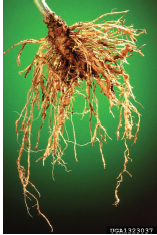 Figure 1. Root galls on pepper caused by root-knot nematode. Scott Bauer, USDA ARS, Bugwood.org.
OTHER NEMATODES
The other nematodes on peppers have similar life cycles (eggs, juveniles, adults), but the time needed to complete a full life cycle varies with the species. They also differ in the symptoms they cause on the root systems. Stubby-root feeding results in root systems with many short and stubby lateral roots. Sting nematodes cause the formation of tight mats of short, swollen roots, and the elimination of new root initials, resembling fertilizer burn. Root-lesion feeding slows root growth and causes dark-brown lesions on the roots.1,3,4
DIAGNOSIS AND SAMPLING
Accurately diagnosing nematode problems in the field can be difficult and usually requires sending plant and soil samples to a diagnostic lab for analysis. Plants showing foliar symptoms will usually occur in groups (foci) in the field, as the nematodes spread slowly within the soil from year to year. It is helpful to determine if the recent cropping history included hosts of the suspected nematode species. Microscopy can be used to identify nematode types, but DNA testing is required to accurately identify and distinguish species of RKN. Many private labs do not offer DNA testing, which is needed to determine the species of RKN present in the field.
Obtain information on sample collection procedures from the lab that will be doing the analysis. Soil sampling usually involves dividing fields into 5-acre blocks and collecting subsamples from several random locations within each block. The best time to sample is at the end of the growing season, just before or just after harvest. Root samples should also be collected randomly from the planting but should only include roots from plants showing early to moderate symptoms. Rotten roots from dying plants can contain opportunistic organisms that make it difficult to detect the nematodes.1,3
MANAGEMENT
To help prevent the introduction of pathogenic nematodes into a field, equipment should be cleaned before it is moved from infested to non-infested fields. If pathogenic nematodes are present, crop rotation can be used to lower populations in the field. The rotational crop sequence will need to be chosen carefully because most pathogenic nematodes have wide host ranges that include common vegetable crop species. Crops should be chosen that are non-hosts or poor hosts that are not suitable for nematode reproduction. If multiple nematode species are present, it may not be possible to find non-host rotation crops for all nematodes present. Because root-knot tends to cause more damage and yield loss than the other nematode species, it is usually best to select hosts that help manage RKN populations. For example, sorghum is a host for the sting nematode, but not for root-knot nematodes.2,3
Other cultural management practices include fallowing and soil solarization. Clean fallowing involves keeping the field both crop and weed-free, usually in the off-season. The lack of live plants in the field deprives the nematodes of food sources. Including periodic soil-discing during the fallow period exposes the nematodes to the elements, increasing the effectiveness of the fallowing process. Soil solarization involves covering moist soil with clear plastic tarps for 4 to 12 weeks during the hottest period of the year. Temperatures under the tarps can increase to levels high enough to eliminate nematodes in the upper levels of soil. However, nematodes can survive at greater soil depths and re-infest the upper layers over time.1,3
Several genes have been identified in peppers that convey resistance to various species of root-knot nematodes. The N gene in peppers provides resistance to Meloidogyne incognita, high-level resistance to M. arenaria race 1, some resistance to M. arenaria race 2 and M. javanica, but no resistance to M. hapla or M. enterolobii. Pepper varieties containing the N gene show lower gall formation levels and support lower nematode reproduction levels than do susceptible varieties. However, N-gene resistance is heat sensitive and becomes less effective when soil temperatures rise above 82 °F.1,5,6 Populations of M. incognita that can overcome N-gene resistance have been found in some pepper-growing areas.7
A series of Me genes (Me-1 to Me-7) have also been identified in peppers that can provide heat-stable resistance against some species of RKN. Me-1, Me-3, and Me-7 are effective against a wide range of Meloidogyne species, including M. arenaria, M. javanica, and M. incognita. Pepper varieties that contain both the Me-1 and Me-3 genes appear to have effective, durable resistance to most of the common species of rootknot nematodes present in North America.8 However, none of the commercially available pepper varieties have effective resistance against M. enterolobii, the guava RKN.9
In pepper-growing areas where nematodes are a persistent problem, the use of fumigant and non-fumigant nematicides has become common. Fumigant nematicides volatilize into gasses once in the soil and diffuse through the air spaces in the soil. Many of the available fumigants require covering the soil surface with plastic tarps to contain the fumigant in the soil for the necessary amount of time. In plasticulture systems, fumigants can be applied under the plastic mulch prior to planting. All of the currently available fumigants are phytotoxic and must be applied at least 3 weeks before planting (longer during periods of low soil temperatures) to give the fumigants time to disperse. Several fumigants are available that provide good control of nematodes on peppers. Check regional production and pest management guides for the products that are registered and effective in your area.1,3 Non-fumigant nematicides are also available for use on peppers. These chemicals are generally less toxic, have fewer off-target effects, and can be applied closer to the time of transplanting than fumigant nematicides.
Non-fumigant nematicides do not have the broad-spectrum activity that fumigants have, and control with non-fumigants may not be as consistent as the control seen with fumigants. Non-fumigant nematicides can be effective against some species of plant pathogenic nematodes but not others.3
SOURCES
1Ploeg, A. 2016. UC pest management guidelines, peppers, nematodes. University of California IPM. 2Bosland, P. and Votava, E. 2012. Peppers: vegetable and spice capsicums, 2nd edition. Crop Production Science in Horticulture 22. CABI. 3Noling, J. 2019. Nematode management in tomatoes, peppers, and eggplant. UF IFAS Extension. ENY-032. 4Ploeg, A. and Aguiar, J. 2019. Root-knot nematodes on bell peppers. University of California Cooperative Extension. 5Thies, J. A. and Fery, R. L. 2000. Characterization of resistance conferred by the N gene to Meloidogyne arenaria Races 1 and 2, M-hapla, and M-javanica in two sets of isogenic lines of Capsicum annuum L. Journal of the American Society for Horticultural Science 125:71-75. 6Fery, R. L., Dukes, P. D., and Thies, J. A. 1998. ‘Carolina Wonder’ and ‘Charleston Belle’: Southern root-knot nematode-resistant bell peppers. HortScience 33:900-902. 7Thies, J. 2011. Virulence of Meloidogyne incognita to expression of N gene in pepper. J Nematol 43:90–94. 8Wang, D. and Bosland, P. W. 2006. The genes of Capsicum. HortScience 41:1169-1187. 9Pradhan, P., Naresh, P., Barik, S., Acharya, G. C., Bastia, R., Adamala, A. K., and Das, M. P. 2023. Breeding for root-knot nematode resistance in fruiting Solanaceous vegetable crops: a review. Euphytica 219.
ADDITIONAL INFORMATION
For additional agronomic information, please contact your local seed representative.
Performance may vary, from location to location and from year to year, as local growing, soil and environmental conditions may vary. Growers should evaluate data from multiple locations and years whenever possible and should consider the impacts of these conditions on their growing environment. The recommendations in this article are based upon information obtained from the cited sources and should be used as a quick reference for information about vegetable production. The content of this article should not be substituted for the professional opinion of a producer, grower, agronomist, pathologist and similar professional dealing with vegetable crops.
BAYER GROUP DOES NOT WARRANT THE ACCURACY OF ANY INFORMATION OR TECHNICAL ADVICE PROVIDED HEREIN AND DISCLAIMS ALL LIABILITY FOR ANY CLAIM INVOLVING SUCH INFORMATION OR ADVICE.
6411_431700 Updated 07/16/2024