

Vegetables by Bayer

ToBRFV Knowledge Center

Confidence on every level – new tomato varieties offer protection against ToBRFV mutation

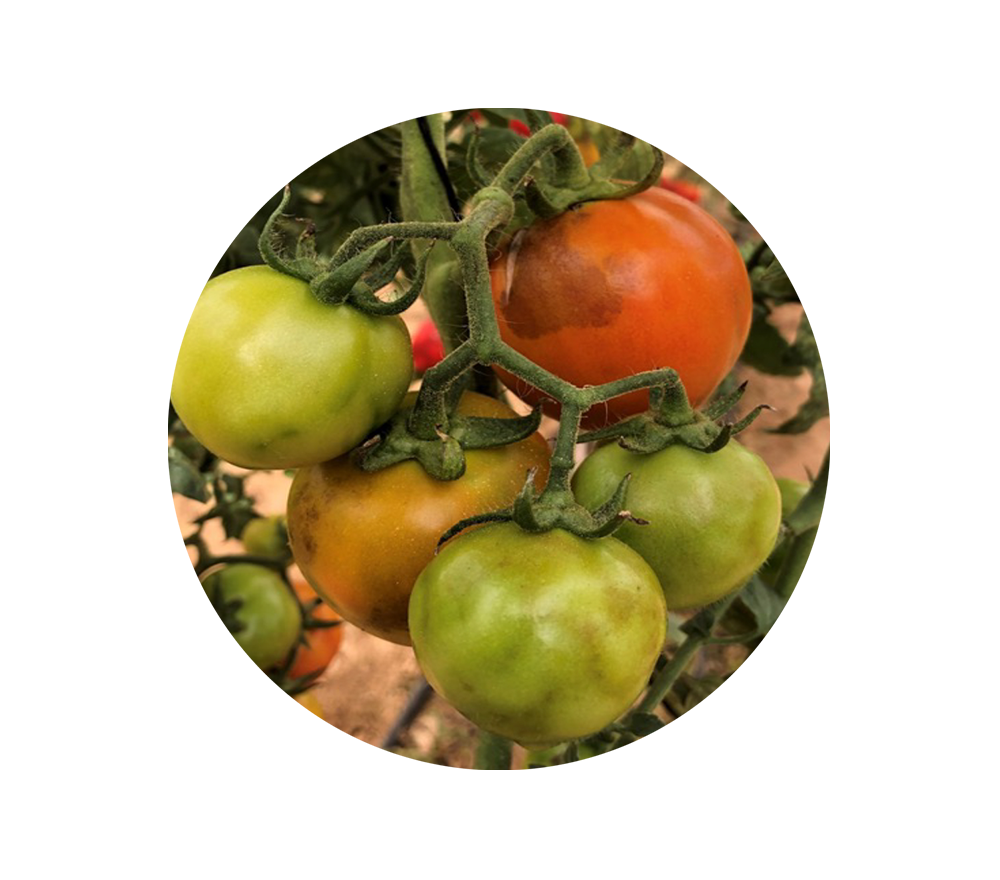
Tomato brown rugose fruit virus (ToBRFV) is a viral disease impacting tomato plants that is spreading rapidly around the world.

Recently, a new threat has emerged: a single nucleotide mutation in ToBRFV has been shown to overcome single-gene resistance in some tomato cultivars (Zisi et al., 2024). This raises concerns for the durability of current resistant varieties on the market.

But there’s good news. Vegetables by Bayer, driven by its world-class seed brands, Seminis® and De Ruiter®, has tested four tomato varieties containing multi-gene resistant technology, and the results show protection – even against the new ToBRFV mutation.

Effort #1
Breeding efforts and testing

Effort #2
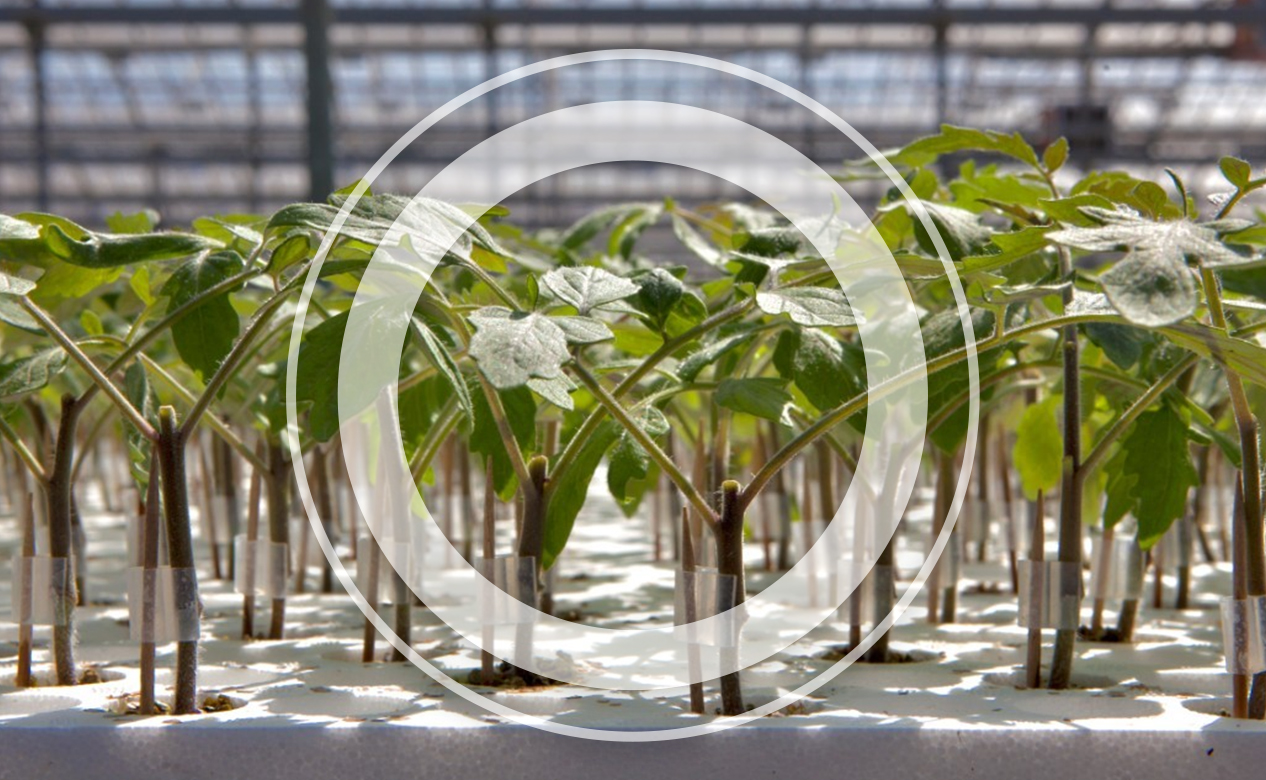
The role of rootstock

Effort #3
ToBRFV-resistant tomato portfolio

SHIELD - Proactive protection for every seed

Our SHIELD program focuses on the prevention and detection of pathogens, like ToBRFV, at our production and processing sites.

Preventing and detecting ToBRFV

Lessons learned in practice have proven it is possible to effectively prevent and detect ToBRFV infections. These guidelines and best management practices can help you grow successfully.

To find out more about disease resistance and the applicable levels of disease resistance, visit https://worldseed.org/document/definitions-of-the-terminology-plants-pests-v-o-seed-industry-2022/

Learn why ToBRFV is a challenge for us all

Our colleagues Jan Kamper (external), and Jan Cees Bron, Corporate Communications, tell you more about the ToBRFV virus and why it is a big challenge for us all.

Developing varieties with durable ToBRFV resistance

Ton Allersma, Research Associate Phytopathology, tells us more about disease resistance and how we are working to develop varieties with durable ToBRFV resistance.

Does your rootstock choice affect ToBRFV resistance?

Growers worldwide have questions about ToBRFV, especially regarding the benefits of using resistant rootstocks. Does choosing a resistant rootstock improve scion performance and protect the crop? Bayer’s research provides insights into this.

News for you

At Vegetables by Bayer we never stand still. Find out what's new straight from the source. Browse our news articles and be the first to know about our latest developments in our ongoing battle against ToBRFV.

Frequently asked questions about ToBRFV

Since ToBRFV was first discovered, our industry-leading R&D team has been working to find a reliable solution to ToBRFV. We are working towards next-generation hybrids with multi-gene resistance in our pipelines and commercial portfolio through combined technical paths and deployment strategies. To achieve this:

  • We are deploying the newest disease diagnostics technologies to assess pathogen evolution and reduce disease risk.
  • We have been actively supporting an initiative to further understand the epidemiology of ToBRFV by sequencing various strains of the virus. We are investigating the evolution of the virus and are actively inventorying and characterizing resistance breaking versions of the virus. We are collaborating with public research institutions on this.
  • Since the outbreak we have been searching for and characterizing sources of resistance. We are using advanced conventional breeding techniques to bring these resistances into suitable genetics as fast as possible. Our strategy consists of stacking several of these resistances in our varieties to bring more durable resistance against ToBRFV mutations.
  • We have a thorough testing protocol for new hybrids to ensure agronomic performance under a wide range of conditions (disease pressure, various environments and management conditions).
  • With the help of our highly qualified scientific team, we are continuously investigating new aspects of virus-host plant interactions. We provide science-based answers to common questions about the effect of host plant resistance on virus spread and multiplication, and of the influence of resistance level in rootstocks on hybrid performance as examples.

From our research to date and collaboration discussions about the virus, it seems most likely that genetic resistance achieved through plant breeding will deliver a durable resistance platform and that a vaccine may not be needed.

The International Seed Federation has established a Definition of the Terms Describing the Reaction of Plants to Pests for the Vegetable Seed Industry. The categories include Susceptibility, Intermediate Resistance (IR), and High Resistance (HR). ISF encourages vegetable seed companies to use these terms in communication with their customers to support a common understanding.

ISF defines IR as restricting the growth and/or development of the specified pest and/or the damage it causes. However, it may exhibit a greater range of symptoms or damage compared to High Resistant varieties. Intermediate-resistant plant varieties will still show less severe symptoms or damage than susceptible plant varieties when grown under similar environmental conditions and/or pest pressure.

An HR claim could be considered when the growth or spread of the virus is highly restricted. (ISF) An HR claim does not mean the plant is immune to the virus.

It is important to understand that IR and HR claims are based on an infection with solely ToBRFV. Combinations of infections, e.g., Pepino Mosaic Virus and ToBRFV, can possibly show more severe symptoms.

It is to be noted that per definition, there is a wide range of resistance levels that can classify as Intermediate resistance. We have heard from growers that there is an overall preference for increased granularity and more industry alignment on ToBRFV resistance claims. We are currently collaborating and investigating opportunities for more industry alignment on ToBRFV resistance claims. Meanwhile, we are committed to informing our growers to the best of our knowledge about trial data on leaf and fruit symptoms in inoculated trials.

While we are receiving very positive feedback from growers on the resistance level in our current portfolio, we are working to offer an even higher level of resistance in the future. To achieve this, we are stacking additional resistance genes onto the ones we already have deployed in our multi gene IR varieties. We have identified additional candidate resistance genes and are currently developing proof of concept experiments. Our goal is to deliver symptomless behavior and highly restricted or absence of virus multiplication in this new wave of products. Through additional gene-stacking we also incorporate another protection layer to bring increased security against possible future mutations in the virus.

Only when products have repeatedly proven to live up to the expected standards, will we bring products to the market with high resistance claim. We are aiming for high standards in agronomic performance, consumer and retail benefits next to increased security against ToBRFV.

We are testing our pipeline in Wageningen where we have a quarantine compartment. We test the performance of our varieties with both viruses and under grower conditions as well as several locations around the globe in internal trial locations. This gives confidence that the resistance level we claim will work under growers’ conditions provided the grower has also taken all necessary measures. This is supported by extensive trialing across glasshouse and greenhouse environments naturally exposed to individual and joint virus pressure in the major global markets.

HR = High Resistance. IR = Intermediate Resistance. To find out more about disease resistance and the applicable levels of disease resistance, visit www.worldseed.org, and view the “Definition of the Terms Describing the Reaction of Plants to Pests for the Vegetable Industry” paper in the Vegetable Resources section.

Stay up to date about ToBRFV

Need more information?

This browser is no longer supported. Please switch to a supported browser: Chrome, Edge, Firefox, Safari.