Skip to Main Content

- Canada
- expand_more
Vegetables Canada
-
Products
Select Your Brand Below to View Full Portfolio of Offerings
-
Resources
Click below for Specialized Tips for Your Growing Environment
-
About
Discover More About Our Commitment to Advance Health and Nutrition Globally, Together With You.
-
Innovation

Learn about our approach to innovation.


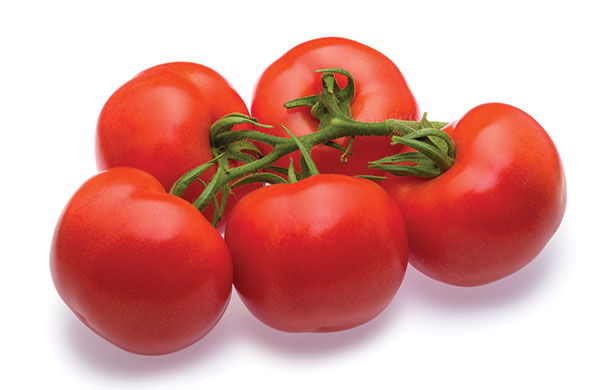
Large truss tomato with high yield potential, excellent fruit quality, strong and vigorous plant, suitable for year-round and artificial light crop cycles.
- Delivers large shiny, high quality fruits due to a balanced plant performance even during hot and humid climate conditions
- Suitable for year-round and lit crop cycles
- Intermediate Resistance to Powdery mildew
Features
- Deep internal and external, shiny color
- High yield potential
- Semi open, strong plant with high vigor
- Excellent fruit shape
- Jointless hybrid
- Good shelf life
- Low incidence of blossom end rot
- Large fruit sizes
- Non-grafting is an option
Advantages
- High yield potential throughout the entire crop cycle
- Enhanced visual, taste and flavor experience
- Open plant habit
Agronomic Tips
- Environment: Heated glasshouses Season: Suitable for year-round and winter crops with artificial light. Starting a crop in summer with this material can be challenging due to its improved vigor and vegetative aspect. Nutrition, climate control and labor must be planned to keep plant balance. Presence of boats can be a concern – it needs generative actions and promote unloading in spring. This material shows more blotchy fruits than check varieties, increased potassium and improving root systems can help alleviate the incidence. Head density: it varies according to latitude, greenhouse type and crop cycle. Maximum head density seen in commercial crops in summer: to 3.6 heads/m2. No blind heads observed in 2 crop cycles of development Grafting on a generative rootstock such as DR0138TX is suitable for short crop cycles. Grafting on a more vigorous rootstock is recommended for long crop cycles. Marinice needs generative steer for its vegetative behavior, especially when starting a crop cycle under high light levels. It tends to hold one extra truss vs Merlice. Truss support is a must for its large fruit size, applying truss support can be a generative impulse. Non-grafting is an option however crop cycle and growing conditions must be considered. If you choose to graft, we advise to pinch above the 2nd true leaf to obtain two heads per plant. In general pinching is the choice of growers. When growing Marinice for long crop cycles, it is advisable to use strong rootstocks such as Maxifort or DR0141TX. Equifort and DR0138TX can be used too. In this case, these materials will confer a more limited vigor and it is expected to obtain a more generative response from the crop itself. In order to obtain better results, it is paramount that the plant raiser delivers generative/balanced plants as the variety can have some boat fruit when to vegetative.
Disease Resistance
Disease Resistance (HR)
Fol:1,2/For/Pf:A-E/ToMV:0-2/ToTV/Va:1/Vd:1
Disease Resistance (IR)
On
Characteristics
AVERAGE WEIGHT
165-170 grams
BRIX POTENTIAL
4.0 - 4.5
EXTERNAL COLOR
Red
HARVEST METHOD
Truss
HARVEST UNIFORMITY
High Uniformity
HARVESTING SEASON
All Year, Lit Crop, Spring
JOINTLESS
Yes
MATURITY (DAYS)
n/a
PLANT TYPE
Indeterminate
RELATIVE MATURITY
Medium-Late
SEGMENT
L
SHAPE
Round
SIZE
Large
SOWING SEASON
All Year, Autumn, Lit Crop
TRANSPLANTING SEASON
All Year, Lit Crop, Winter
VIGOR
Strong